Last Updated 8/27/10
COMMON QUESTIONS
- Natural: As Defined By USDA
- Hormones: Not Allowed By USDA
- Safe Handling and Cooking: Protect Yourself
ANIMAL CARE PRACTICES
FOOD ALLERGENS & INGREDIENTS
COMMON QUESTIONS
Natural: As Defined By USDA
- Q:
- What does USDA require for a chicken product to be labeled as “natural”?
- A:
-
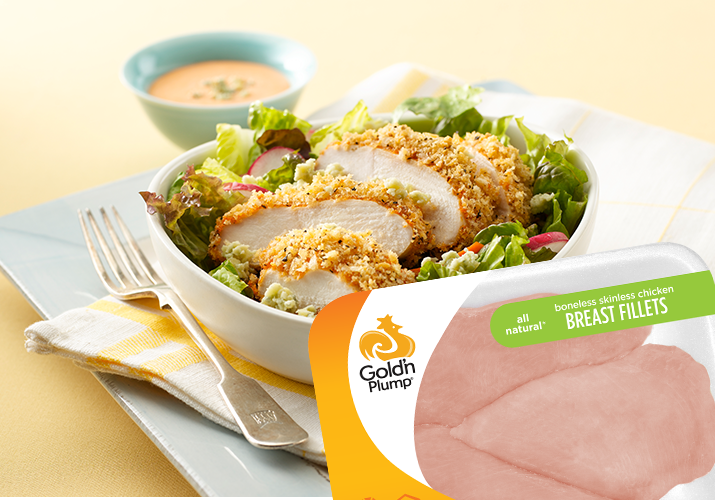
To be labeled as "natural" according to USDA guidelines, chicken must be minimally processed—meaning that the product has simply been cleaned, cut up, trimmed and packaged. In addition, it should contain no artificial ingredients or color. Some “natural” products may contain solution as long as the ingredients used in the solution are made from natural ingredients. Only products that meet these criteria can display “natural” on the label. See Meat & Poultry Labeling Terms for more information.
Hormones: Not Allowed By USDA
- Q:
- Are chickens fed hormones or steroids?
- A:
- No. There are no hormones or steroids approved for use in chicken. Consequently, there are no added hormones in any chicken sold commercially in the United States.
- Q:
- Why does your label state "no added hormones" instead of "hormone-free"?
- A:
- All living creatures have hormones in their bodies naturally, including chickens. These hormones regulate many of a chicken's functions similar to the way they do in a human. Because there are naturally occurring hormones in chicken, we cannot state on our label that our chicken is hormone-free.
Safe Handling and Cooking: Protect Yourself
- Q:
- What are some of the food safety risks related to raw meat and poultry?
- A:
- Most food safety issues related to chicken and other fresh meat arise from bacteria (such as salmonella) common in the digestive tracts of farm animals. These bacteria are easily destroyed by heat. Therefore, proper cooking of poultry virtually eliminates the risk of these potentially harmful bacteria. Click here for more safe cooking tips for chicken as well as handling advice to ensure safety from the grocery store cart to those leftovers in your refrigerator.
- Q:
- How is harmful bacteria controlled during production?
- A:
- Gold'n Plump, along with most U.S. poultry producers, follows a HACCP (Hazard Analysis Critical Control Point System) plan that sets the process for inspection and monitoring of food safety. It has greatly reduced the incidence of potentially harmful bacteria on fresh poultry. While the industry continues to look for new ways to reduce or eliminate problem bacteria from chicken, proper handling and cooking will always be necessary to ensure food safety.
ANIMAL CARE PRACTICES
Animal Welfare Standards
- Q:
- Does your company have an animal welfare policy? What is it?
- A:
- Gold'n Plump Poultry is respectful of animal rights and takes every measure possible to ensure our practices and procedures are humane. From start to finish, our chickens are handled with the utmost care by people well-trained in animal science, nutrition, handling, rearing; and we use guidelines established by the National Chicken Council. Our goal is to bring healthy chickens to market. Our animal welfare position is communicated to all new and existing employees, and anything less than the most humane treatment will not be tolerated. A healthy chicken is a well-cared-for and well-treated chicken. That's our philosophy and the way we run our company.
Barn Conditions
- Q:
- Are your chickens raised in cages?
- A:
- No. Our broiler chickens are not raised in cages, and neither are others in the industry. They are raised in modern, well-ventilated, climate-controlled barns designed to reduce stress and maintain optimum bird health.
- Q:
- What is life in the barn like?
- A:
-
In our barns, birds have space to roam and access to fresh food and filtered water at all times, which is provided through closed, sanitary systems. To give you a better idea of what it's like, if a person walks down the middle of a barn, the chickens have plenty of room to run out of the way without running on, into or on top of one another. The flooring is covered in natural bedding material, consisting of things like wood shavings, rice hulls, and sunflower seed shells. Lighting makes conditions as true to day and night as possible, so chickens get both awake times and the rest they need. Overall, we make their environment comfortable, as well as keep them safe from predators, the elements, and diseases coming from other birds and animals.
- Q:
- Why aren't your chickens raised outdoors?
- A:
-
We experience hot summers and very cold winters in the upper Midwest, so the barns keep them comfortable, despite weather extremes. It's also important we keep our chickens safe from predators, the elements, and diseases coming from other birds and animals. Raising our chickens in enclosed barns helps eliminate exposure to foreign materials and litter, and to droppings from wild birds such as ducks and gulls. These wild birds can carry diseases like avian influenza which can cause both bird and human health issues.
Feed
- Q:
- This is good information, but I'm still concerned about antibiotics use. What can I do?
- A:
- As shared by the National Chicken Council, to the best of the industry's knowledge, there have been no cases of antibiotic resistance in humans directly linked to the use of antibiotic feed additives in chickens. We know, however, that some consumers still have concerns. To help answer the market desire for chicken raised entirely without the use of antibiotics, Gold'n Plump Poultry introduced a new brand of chicken called Just BARE® Chicken in the fall of 2008. Chickens raised for Just BARE are never, ever given antibiotics of any kind, neither in the shell nor while being raised. Interested consumers can find more information about Just BARE Chicken at justbarechicken.com.
- Q:
- What does Gold'n Plump feed its chickens?
- A:
- As a fully integrated poultry producer, we have complete control over our chickens - from egg to maturity. We operate two feed mills that produce all of the feed our chickens ever eat. Our proprietary feed formulas are developed under the direction of experienced nutritionists to produce healthy chickens and wholesome, tasty chicken products. Our feed contains naturally nutritious corn, soybean meal, canola meal, minerals, and vitamins. In addition, like nearly all poultry companies, our feed includes a small percentage of natural animal by-products.
- Q:
- Why are animal by-products used?
- A:
All animals need fat and protein to maintain healthy organ function.
Animal by-products are widely used in poultry raising, because they're considered the best, most readily available sources of protein and fat. All of our suppliers are based in the upper Midwest and meet all FDA and USDA standards for food safety and quality.
- Q:
- Can your chickens eat and drink whenever they want?
- A:
- Yes. Our chickens are never caged, and can access nutritious feed and filtered water from a clean, sanitary system at all times.
- Q:
- Does Gold'n Plump use antibiotics when raising chickens?
- A:
-
Yes. Gold'n Plump uses antibiotics responsibly - and only as necessary - to help protect flock health for those chickens raised for products sold under the Gold'n Plump® brand. This generally occurs during two time periods:
- In the shell. Developing embryos are inoculated against a serious illness called Marek's Disease, while they are in the shell. Because a tiny hole is made in the shell when the vaccine is given, an antibiotic is also administered at the same time to prevent bacteria from entering the shell and harming the developing chick.
- In the feed. Like many other poultry companies, Gold'n Plump adds ionophores (a type of coccidiostat) to our chicken feed to help slow or stop the development of a disease called coccidiosis that attacks the intestinal tract of poultry and can hinder growth and cause serious illness and even death. The use of coccidiostats like ionophores allows our broiler chickens to develop immunity, gradually, without getting a severe case of the disease.
- Q:
- Are ionophores the same as antibiotics?
- A:
- Yes. The United States Department of Agriculture Food Safety and Inspection Service (USDA-FSIS) classifies ionophores as antibiotics, due to how they work. However, the ionophores we use in raising our chickens ARE NOT in the same class of antibiotics used in humans. So, they do not apply to the discussion about antibiotic resistance in humans. In other words, they are "chicken" antibiotics, for lack of a better way of putting it.
- Q:
- Does that mean there are "chicken" antibiotics in the chicken I eat?
- A:
No, it does not. This is because the USDA outlines safe withdrawal periods in which chickens are weaned from all antibiotics well before processing. We follow stingent FDA and USDA guidelines for the administration of antibiotics that ensure there is virtually NO antibiotics residue in any of the chicken we sell/consumers buy and serve their families. Withdrawal periods are required for all brands. They typically far exceed the time it takes for antibiotics to pass throught the chickens' systems.
- Q:
- How is the withdrawal process and antibiotic residues monitored?
- A:
- All chicken produced in the United States is inspected by the USDA. Inspectors test meat samples for chemical and antimicrobial residues, and all meat must be in compliance within permitted levels. Chicken consistently has among the best record of any product tested by the government.
- Q:
- Why can your company raise chickens without antibiotics for the Just BARE® brand but not Gold'n Plump?
- A:
- Just BARE is only a small portion of our production, so we're able to use flock rotation as a tool to maintain bird health versus antibiotics. With flock rotation, the frequency of times a family farm partner raises flocks for Just BARE is closely monitored and rotated when necessary to control organisms without the use of tools like coccidiostats. This process is tricky, and it would be difficult to use on a large scale. Doing so would also likely impact the affordability of fresh chicken products for many consumers. Until alternatives are available to minimize flock disease, suffering, and death on a large scale, we are not willing to sacrifice the use of long-used tools like antibiotics.
- Q:
- Does Gold'n Plump use arsenicals?
- A:
- Yes. To keep our chickens healthy, Gold'n Plump, like many other poultry companies, uses a feed additive called Roxarsone.
- Q:
- What is Roxarsone?
- A:
-
Roxarsone is used only when necessary, which can be as little as 3 months out of the year. It is used to:
- Maintain product quality and consistency, ensuring humane care. Without it, chickens would suffer more frequent and serious illness and flock health would be compromised.
- Improve food safety by fighting off strains of disease, when left unchecked, can raise levels of salmonella in chicken.
- Reduce the need for antibiotic treatments.
- Q:
- Why do people think Roxarsone shouldn't be used in chicken feed?
- A:
- Roxarsone contains a minute amount of a naturally occurring form of arsenic, which causes concern for some people. Most people associate arsenic with the dangerous chemical compound made famous in the play, Arsenic and Old Lace. What they don't realize is that arsenic occurs naturally in the envionment, in a variety of forms, and is found in many common foods we eat and the water we drink.
- Q:
- If arsenic is found naturally in many of the foods we eat, does that include chicken?
- A:
Yes. There are extremely low levels of naturally occuring arsenic in virtually all chicken. There is, however, far more arsenic in other everyday foods than chicken and even the newspaper you read.
Shrimp, for example, contains 42,000 parts per billion, haddock 2,200 per billion, cornmeal 800 parts per billion, and even drinking water many contain as much as 10 parts per billion. In comparison, a recent study found there to be 20.2 parts per billion in our boneless skinless chicken breasts. This is just a fraction, approximately one twenty-fifth, of the level deemed safe for consumption by the Food and Drug Administration. The FDA allows 500 parts per billion for uncooked chicken muscle.
To put these very low levels of naturally occuring arsenic in perspective, one part per billion is equivalent to 15 drops in an Olympic-sized swimming pool containing 810,000 gallons of water, or 1 second in 32 years.
You can be exposed to more arsenic just reading the newspaper than you can eating chicken. One popular national newspaper, for example, tested with arsenic levels of 54.1 parts per billion.
- Q:
- Does using arsenicals raise the level of naturally occurring arsenic in chicken?
- A:
No. Repeated studies have shown that the infrequent use of the feed ingredient Roxarsone (which contains a form of naturally occurring arsenic) does not change the levels of arsenic found in chicken.
When used, we follow all federally regulated safe usage practices, including withdrawal procedures, to ensure product safety. These practices require that chickens are weaned from feed additives (such as Roxarsone) well before processing.
Withdrawal periods are verified through extensive research trials and typically far exceed the time it takes for feed additives to pass through the chickens' systems. Our compliance is continuously verified by a sampling program carried out by the U.S. Department of Agriculture (USDA) and the Food and Drug Administration (FDA).
- Q:
- Can I buy arsenic-free chicken?
- A:
- There is no such thing as arsenic-free chicken. Arsenic occurs naturally in the soil that grows our crops, the water we drink and the air we breath, so it is virtually impossible to find any meat that doesn't contain extremely low levels of arsenic (though not always detectable).
FOOD ALLERGENS & INGREDIENTS
Food Allergens & Ingredients
- Q:
- Does Gold'n Plump chicken contain any allergens?
- A:
-
Gold'n Plump® All Natural™ Line of fresh chicken products does not contain any additives, including solutions. Anything labeled under the All Natural label, including our All Natural Rotisserie Chicken does not contain any allergens or ingredients that can cause food sensitivies, as shipped from our company.
However, it's important to note that supermarket meat and/or deli team members may occasionally add ingredients of their own after our products are distributed to them. Therefore, we strongly recommended that you check the label or talk to the meat or deli department manager if you suspect additional ingredients may have been used.
For more information on specific products, contact our Consumer Help Line, Monday through Friday, 8:30-4:30 Central Time.
- Download: Allergens and Food Sensitivities_Shared0209.pdf